

Fort Gaines Landscape Services
Sign up now for autumn service and enjoy a vibrant, worry-free yard all season long!
Get a Free QuoteLandscape Services Tailored for Fort Gaines, Georgia
Expert Lawn Care for Fort Gaines Homes
Fort Gaines, Georgia’s unique climate—with its humid summers, occasional droughts, and mild winters—creates distinct challenges for residential landscapes. Homeowners in neighborhoods near George T. Bagby State Park or along the Chattahoochee River often contend with soil erosion on sloped lots, as well as shaded lawns beneath mature pecan and oak trees. Summer heat can stress turfgrass, while winter road treatments may introduce salt exposure along driveways and curbs. Our services are designed to address these local factors, ensuring your lawn thrives year-round. For more information about the city’s environment and community resources, visit the official Fort Gaines website.
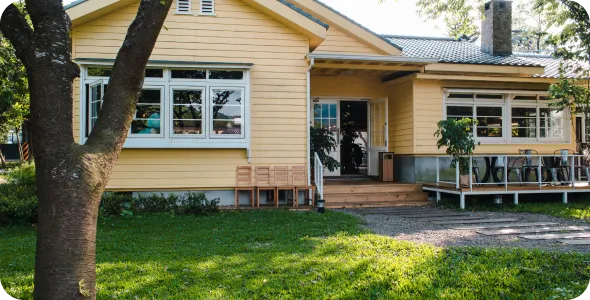
Our Fort Gaines Landscaping & Yard Care Services
Fort Gaines Gardening Services
Fort Gaines Yard Clean Up
Why Choose Fort Gaines Landscape Services

Fort Gaines Homeowners Trust Us
-
Expert Lawn Maintenance
-
Reliable Scheduling
-
Competitive Pricing
-
Professional Team
-
Satisfaction Guarantee
-
Personalized Service
Contact Your Local Fort Gaines Public Works or Solid Waste Department for Green Waste Info
Fort Gaines, located in Clay County on Georgia's lower Coastal Plain, follows a rural municipal model for yard waste management. Residents should bundle branches under four feet in length and place bagged grass clippings, leaves, and hedge trimmings curbside on scheduled pickup days—typically coordinated through the city's Public Works office. Plastic bags are discouraged; biodegradable bags or open containers are preferred. Blowing or dumping clippings, leaves, sediment, or fertilizer granules into streets, ditches, storm drains, or the Chattahoochee River corridor is strictly prohibited under the Clean Water Act and local stormwater expectations. Commercial landscapers should confirm disposal requirements directly with the city, as separate fees or approved drop-off locations may apply. Grasscycling—leaving finely cut clippings on the lawn—reduces waste volume and returns nutrients to sandy Coastal Plain soils.\n\n
Fort Gaines City Hall / Public Works
\n57 Washington Street, Fort Gaines, GA 39851
\nPhone: (229) 768-2311
\nOfficial Website: City of Fort Gaines
\n\n
Lawn Care Regulations & Permits in Fort Gaines, GA
All commercial pesticide applicators working in Fort Gaines must hold valid Georgia Department of Agriculture licensing under the Georgia Pesticide Use and Application Act of 1976 and the Georgia Pesticide Control Act of 1976. Verify any applicator's credentials through the Georgia Department of Agriculture - Search for Pesticide Applicators. Fertilizer products sold and applied in Georgia are regulated under the Georgia Fertilizer Act of 1997, though local stormwater ordinances and Chattahoochee River watershed sensitivity may further influence application timing and runoff-prevention practices. Outdoor watering must comply with statewide Georgia Water Conservation rules, including odd/even-day schedules and early-morning or late-evening irrigation windows. Commercial operators should maintain a valid occupation tax certificate with the City of Fort Gaines, carry liability insurance, and observe local noise ordinance hours for mowers and blowers.\n\n
Georgia Department of Agriculture
\n19 Martin Luther King Jr. Drive SW, Atlanta, GA 30334
\nPhone: (404) 656-3600
\nOfficial Website: Georgia Department of Agriculture
\n\n
What Neighborhoods Do We Serve in Fort Gaines, GA?
Fort Gaines is a small Coastal Plain community where sandy to sandy-loam soils, low organic matter, and proximity to the Chattahoochee River shape every lawn care decision. We serve five to seven distinct areas, each with unique considerations:
- Downtown / Washington Street Corridor — Older residential lots with mature pecan and oak canopy, compacted sandy-clay fill near foundations, and centipedegrass or bermudagrass lawns requiring shade management and careful irrigation.
- Bluff Area along the Chattahoochee — Properties near the river bluff face erosion risk, steep grade changes, and stream-buffer sensitivity; bermudagrass and bahiagrass stabilize slopes while protecting water quality.
- North Fort Gaines / Highway 39 Corridor — Larger rural-edge lots with full-sun bermudagrass, sandy soils prone to nutrient leaching, and minimal HOA restrictions; drought stress is the primary summer challenge.
- South Fort Gaines / Hancock Street Area — Established neighborhoods with mixed shade from pines and hardwoods, centipedegrass predominating, and low-spot drainage issues after heavy summer rains.
- School District Zone / Trojan Drive Area — Properties near Clay County schools with higher foot traffic, bermudagrass athletic turf, and compacted sandy-clay soils needing periodic aeration.
- Cemetery Road / Western Residential Pockets — Quiet lots with bahiagrass and centipedegrass, pine-straw accumulation, and acidic sandy soils that benefit from lime applications guided by soil testing through the USDA Web Soil Survey.
Partnering With Fort Gaines's Stormwater, Environmental, or Sustainability Office
Fort Gaines's Public Works operations coordinate stormwater management in alignment with Georgia EPD - Stormwater and Georgia EPD - Municipal Stormwater guidance. The Chattahoochee River and Walter F. George Reservoir downstream make nutrient and sediment runoff prevention critical. Sustainable lawn care practices that support local water quality include:
- Proper mulching around beds and trees to reduce bare-soil erosion
- Grasscycling to return nitrogen to sandy soils naturally
- Compost topdressing to improve moisture retention in fast-draining Coastal Plain soils
- Rain garden installation in low-lying yard areas to capture runoff
- Native and adapted plant integration to reduce irrigation demand
- Avoiding fertilizer application before forecasted rain events
Coordination with the Georgia Soil and Water Conservation Commission - Urban Erosion & Sediment Control ensures that any grading or landscape renovation follows erosion-control best practices.\n\n
Georgia Environmental Protection Division
\n2 Martin Luther King Jr. Drive SE, Suite 1456 East, Atlanta, GA 30334
\nPhone: (404) 656-4713
\nOfficial Website: Georgia Environmental Protection Division
\n\n
Top Fort Gaines Lawn Problems (and How We Solve Them)
Fort Gaines's South Georgia / Coastal Plain setting produces a distinct set of turf challenges. The most common problems and science-based solutions, guided by UGA Turfgrass and UGA Lawn Care & Landscaping research, include:
- Nutrient leaching in sandy soils — Apply slow-release fertilizers in split applications during the active growing season (May–September) rather than single heavy doses; compost topdressing builds organic matter and improves nutrient retention.
- Drought stress between rain events — Irrigate deeply and infrequently during early morning hours; select drought-tolerant bermudagrass or bahiagrass cultivars for low-input areas.
- Mole cricket damage — Monitor for tunneling activity in spring; apply targeted bait or biological controls per UGA integrated pest management guidelines.
- Nematode pressure — Sandy soils harbor root-knot and sting nematodes; soil sampling confirms populations, and resistant turf cultivars or organic soil amendments reduce damage.
- Large patch disease — Avoid late-season nitrogen applications on centipedegrass and zoysiagrass; improve drainage and air circulation around affected areas.
- Weed pressure after summer rain — Maintain proper mowing height (one to two inches for centipedegrass, one to one-and-a-half inches for bermudagrass) to shade out crabgrass and spurge; apply pre-emergent herbicides in early spring.
- Chinch bug infestations — Inspect St. Augustinegrass during hot, dry spells; targeted insecticide applications and proper irrigation reduce populations.
What Makes Lawns in Fort Gaines Different From the Rest of Georgia?
Fort Gaines sits in USDA Hardiness Zone 8b on the lower Coastal Plain, giving it a distinctly different turf environment compared with Piedmont, mountain, or coastal Georgia communities:
- Sandy to sandy-loam soils drain rapidly and leach nutrients quickly, unlike the heavy red clay of Metro Atlanta or the rocky clay loam of North Georgia foothills.
- Growing season exceeds 260 days, with warm-season grasses actively growing from late March through early November—far longer than North Georgia's compressed season.
- Centipedegrass, bermudagrass, and bahiagrass dominate residential lawns, whereas tall fescue is impractical due to extreme summer heat and humidity.
- Rainfall averages near 52 inches annually, but sandy soils shed moisture quickly, creating drought stress between storms that Piedmont clay lawns rarely experience.
- Mole crickets and nematodes are far more prevalent here than in clay-based regions, requiring specialized monitoring and management.
- Chattahoochee River proximity adds watershed-protection responsibility absent in inland Middle Georgia communities.
- Flat to gently rolling terrain reduces slope-erosion risk compared with North Georgia but increases low-spot saturation after heavy downpours.\n\n
UGA Cooperative Extension — Clay County
\nPhone: (229) 768-2601
\nOfficial Website: UGA Cooperative Extension
\n\n
Supporting Local Events in Fort Gaines With Lawn Expertise
Fort Gaines's tight-knit community relies on well-maintained green spaces for civic life. Lawn care professionals support the community through:
- Preparing Frontier Village Park and municipal grounds for seasonal festivals and heritage celebrations
- Maintaining athletic fields at Clay County schools for football, baseball, and track seasons
- Supporting downtown beautification for the annual Frontier Days festival and community gatherings
- Assisting Parks and Recreation with turf recovery after heavy-use events
- Coordinating storm cleanup after summer thunderstorms, removing fallen limbs and repairing turf damage from wind and flooding
- Volunteering for Chattahoochee River corridor cleanup events and watershed education programs
- Supporting church grounds, the Clay County Library, and community center landscapes\n\n
National Weather Service — Tallahassee Office
\n1017 Academic Way, Tallahassee, FL 32306
\nPhone: (850) 942-8833
\nOfficial Website: National Weather Service Offices
\n\n
Eco-Friendly Landscaping Backed by Fort Gaines's Water-Saving and Green Initiatives
Aligning with Georgia Water Conservation goals and Chattahoochee watershed stewardship, responsible lawn care in Fort Gaines emphasizes:
- Smart irrigation — Controllers with rain sensors, zone calibration for sandy soils, and watering only during approved early-morning or late-evening windows
- Drought-tolerant turf selection — Bermudagrass and bahiagrass for low-input areas; reducing high-maintenance turf in low-use zones
- Reduced-chemical approaches — Compost topdressing, integrated pest management, proper fertilizer timing, and pollinator-friendly native beds
- Carbon footprint reduction — Battery-powered mowers and blowers, route efficiency, local mulch reuse, and grasscycling
- Soil health building — Organic amendments to improve moisture-holding capacity in sandy Coastal Plain soils, reducing irrigation frequency and nutrient runoff
- Invasive species awareness — Monitoring for cogongrass and other invasive plants per UGA Invasive Species guidance\n\n
U.S. Environmental Protection Agency, Region 4
\n61 Forsyth Street SW, Atlanta, GA 30303
\nPhone: (404) 562-9900
\nOfficial Website: EPA Region 4
\n\n
Proudly Serving These Streets and Areas in Fort Gaines
Our service coverage spans every corner of Fort Gaines and surrounding Clay County areas:
- Downtown / Central — Washington Street, Commerce Street, Hancock Street, Troupe Street, Jefferson Street, Court Square area
- North Fort Gaines — Highway 39 North (Cuthbert Road), Blakely Highway, Pataula Creek corridor properties
- South Fort Gaines — Highway 39 South, River Road, Cemochechobee Creek area, Walter F. George Reservoir vicinity
- East Side — Eufaula Road, Bluff Drive, Chattahoochee River bluff neighborhoods, Bagby State Park approach
- West Side — Cemetery Road, Coleman Road, Sunset Drive, rural-edge residential properties
Notable landmarks and green spaces served:
- Frontier Village Park
- Clay County School campus and athletic fields
- Bagby State Park approach corridor
- Chattahoochee River bluff overlooks
- Fort Gaines City Cemetery grounds
- Clay County Courthouse Square
- Walter F. George Lock and Dam recreation area
Properties near the Chattahoochee River bluff, Pataula Creek, or Cemochechobee Creek require special attention to stream-buffer rules, erosion prevention, and stormwater-quality protection.\n\n
Georgia Soil and Water Conservation Commission
\n4310 Lexington Road, Athens, GA 30605
\nPhone: (706) 552-4470
\nOfficial Website: Georgia Soil and Water Conservation Commission
\n\n